Proyecto Manthanō and Doom of tools
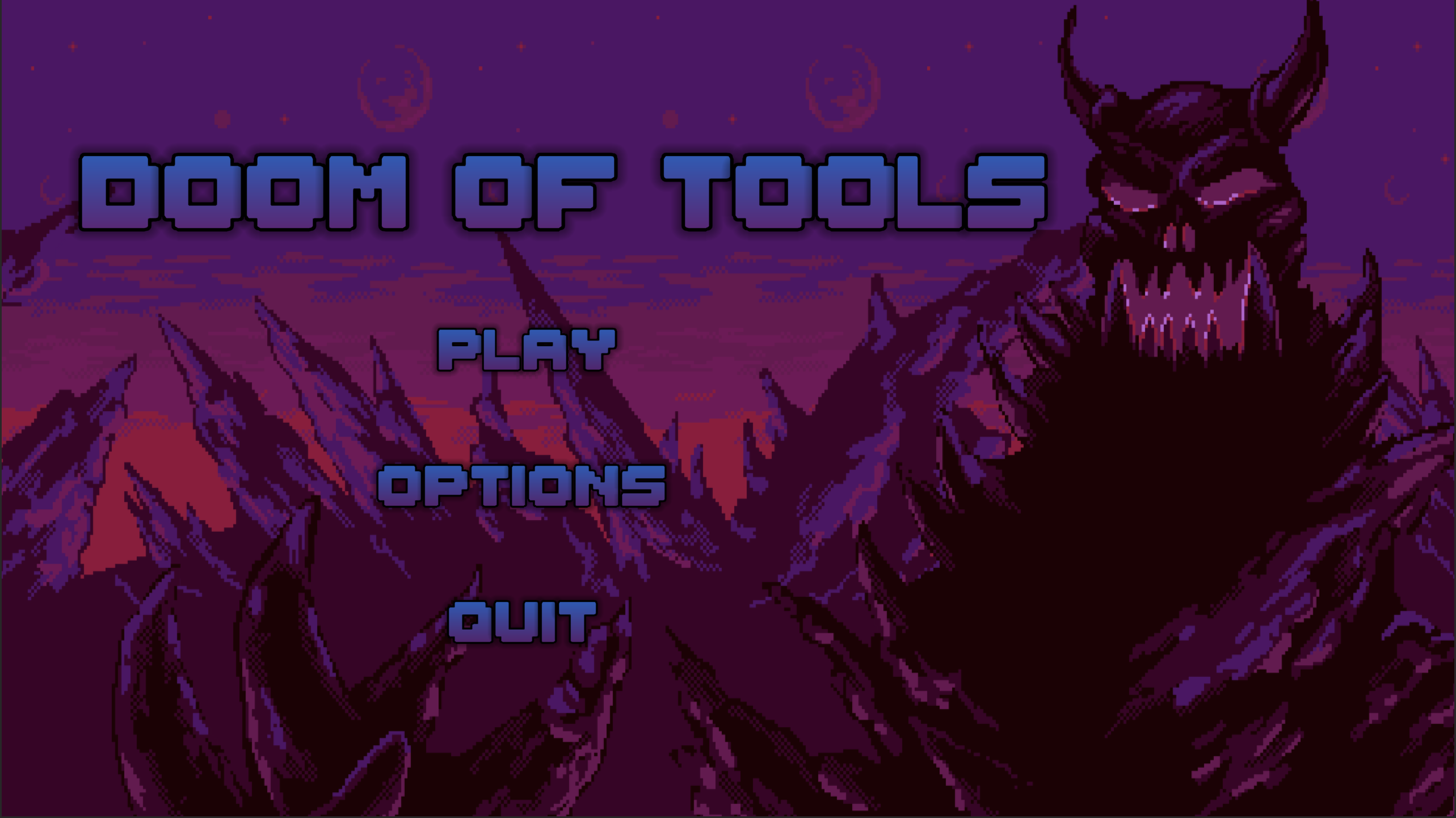
A solo journey into learning Unity from scratch, culminating in a turn-based, deck-building roguelite.
Proyecto Manthanō was my final degree project: a solo challenge to learn Unity while creating a complete game from scratch. The result is Doom of Tools, a 2D turn-based, deck-building roguelite inspired by Slay the Spire and Into the Breach.
Every aspect of the game—programming, mechanics, design, art, and animation—was developed by me. Players control “tool-humans,” cursed by the demon Bael, battling through the underworld on grid-based maps using strategic card-based abilities. Each run is procedurally generated, offering unique challenges and requiring constant adaptation.
Project Goal & Methodology
The main goal was to learn Unity independently while producing a playable demo. My methodology included:
- Game Design Document (GDD): Defined the story, visual style, core mechanics, characters, levels, and interfaces.
- Knowledge Assessment: Identified skills required, from C# programming to pixel art, and learned them through tutorials and experimentation.
- Practical Exercises: Applied concepts in small prototypes to solve potential technical and design challenges.
- Demo Development: Built the final demo with all core mechanics, balancing gameplay and producing content iteratively.
This approach allowed me to develop both technical and creative skills simultaneously, reinforcing my self-learning abilities and project management.
Core Gameplay
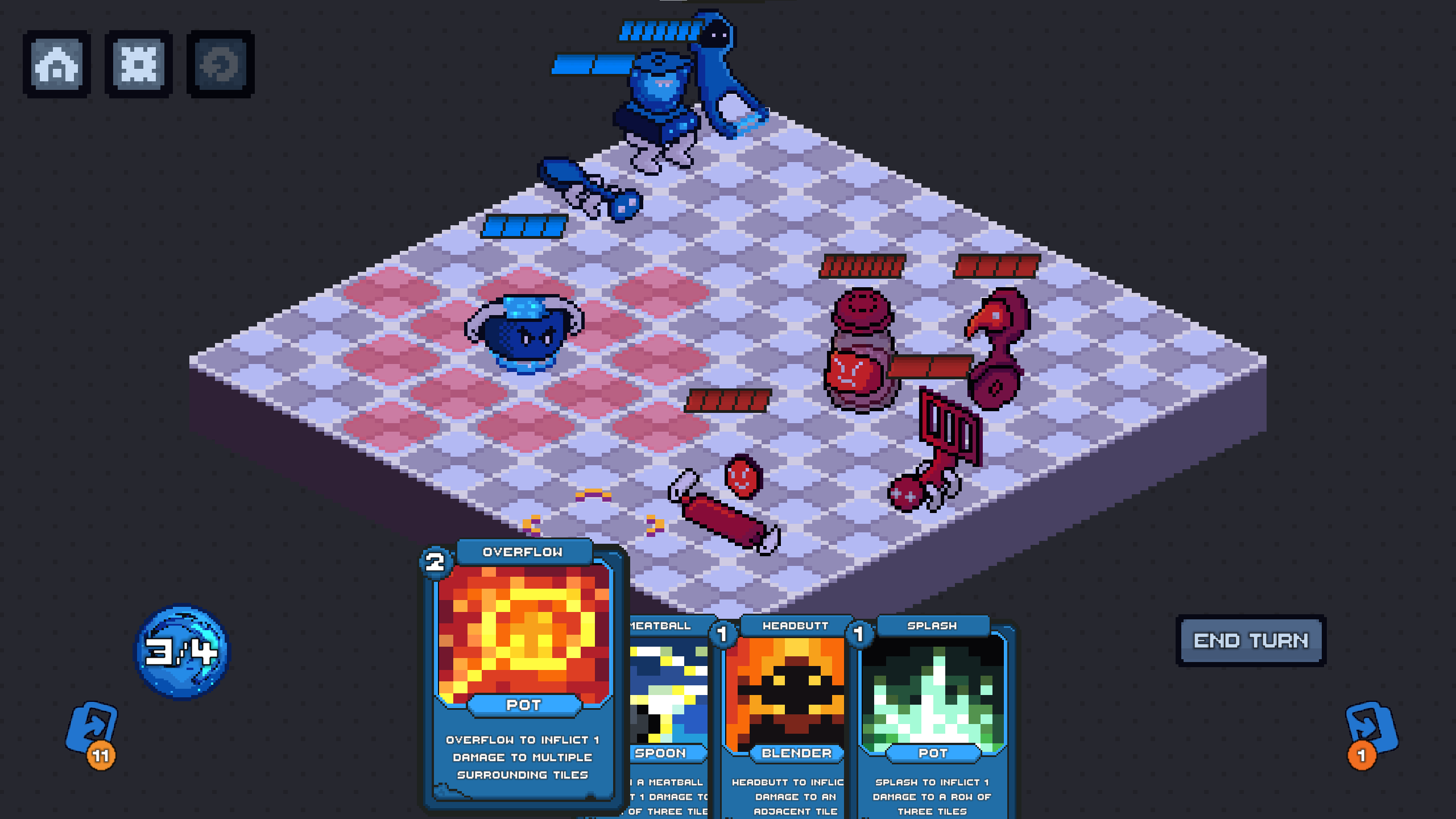
- Turn-Based Strategy: Grid-based combat emphasizes positioning and card management.
- Deck-Building: Characters’ abilities are represented by cards, which evolve during each run.
- Roguelite Progression: Randomized events, levels, and rewards ensure replayability and strategic depth.
Production Highlights
Programming:
- Characters’ movement, attacks, health system, enemy AI.
- Card and energy system, turn system, menus, tutorials, and sound management.
Art & Animation:
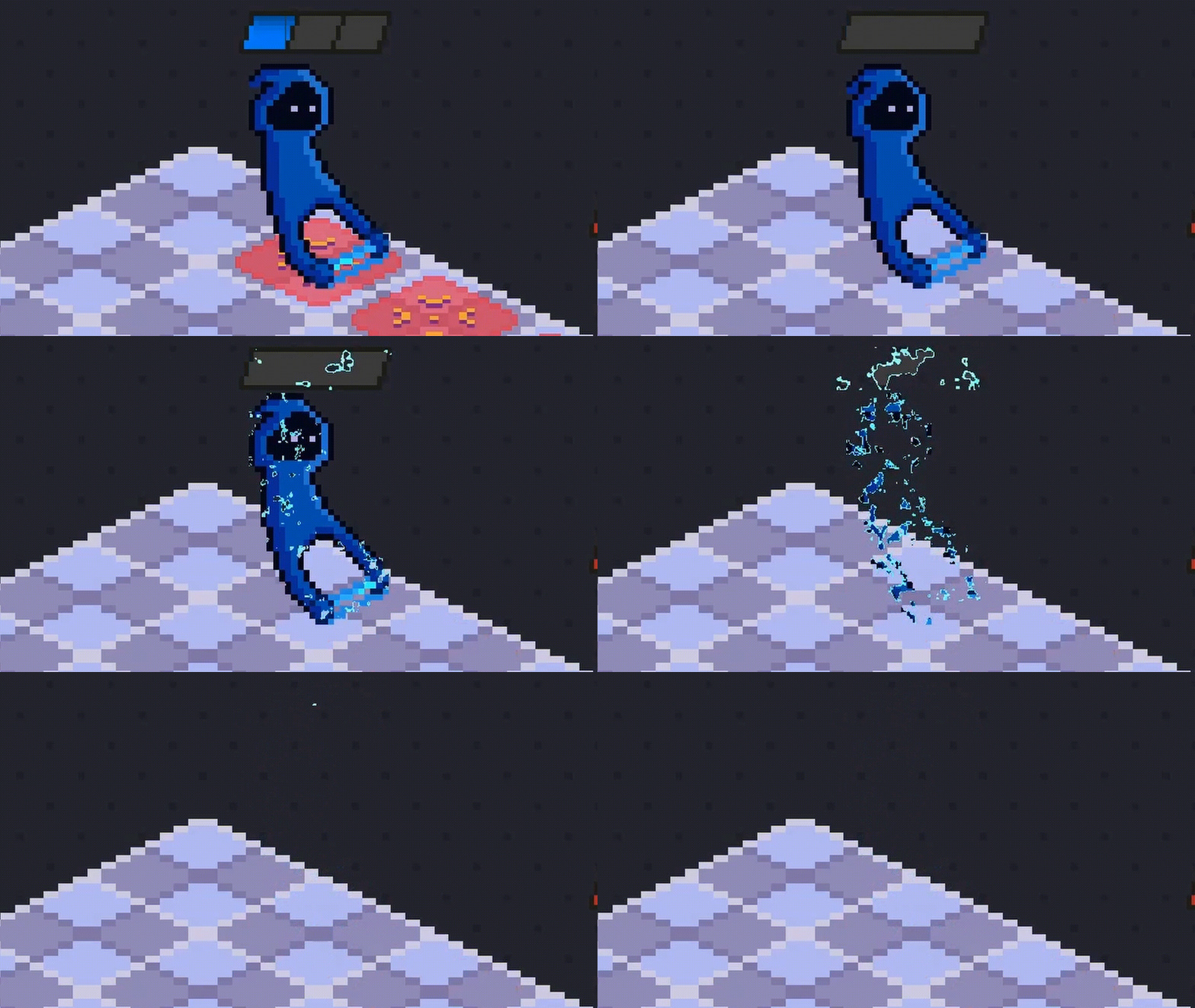
- 10 characters with idle, movement, and damage animations.
- Pixel art backgrounds, level tiles, and menus created in Aseprite.
- 60 skill cards with visual effects for attacks, feedback indicators, and UI elements.
Learning Process:
- Overcame technical challenges such as pixel-perfect rendering, managing Unity’s Animator efficiently, and separating visual objects from logic to prevent conflicts.
- Learned to iterate on art and animations, balancing aesthetics with gameplay functionality.
- Gained confidence in self-directed problem-solving, independent learning, and project planning.
Reflection
Completing Proyecto Manthanō allowed me to:
- Combine Unity, C#, and pixel art into a complete project.
- Understand scope management in solo projects.
- Prove my adaptability and independence as a developer.
The final demo is not only a game but also a showcase of end-to-end production experience.